
Sustainability
In This Section
Steel's Environmental Footprint
The low environmental impacts of structural steel are determined in accordance with industry standards, vetted by third parties, and transparently disclosed in order to provide a comprehensive representation of domestic steel construction products.
Need a Sustainability Primer?
What is an LCA?
Life Cycle Assessment (LCA) is a systematic and comprehensive method used to evaluate the environmental impacts of a product, material, process, or service throughout its entire life cycle. This assessment considers all stages of a product's life, from the extraction of raw materials through to processing, manufacturing, distribution, use, and ultimately disposal or recycling.
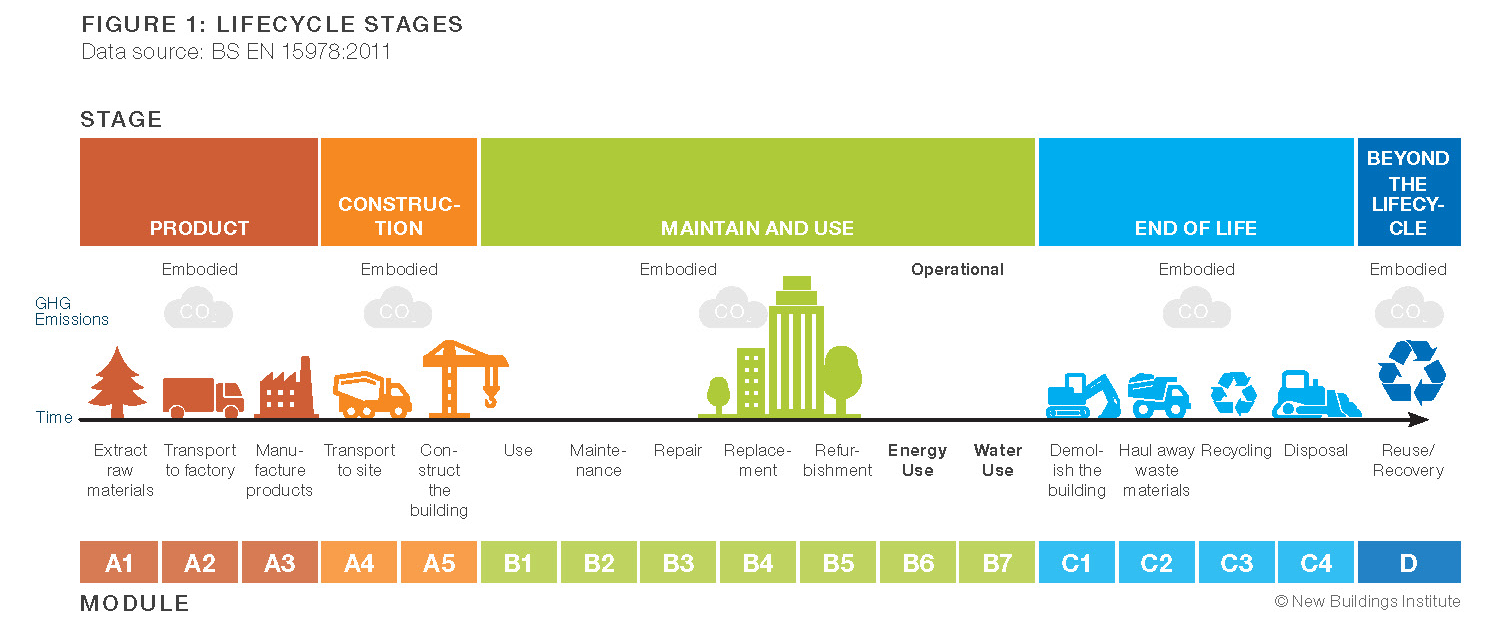
In Life Cycle Assessment (LCA), structural material selection impacts the product stage and end-of-life stage most. Modules A1 to A3 focus on the product stage, covering the initial phases of a product's lifecycle, and modules C1 to C4 focus on end of life. These modules are essential for understanding the environmental impact of a building. Here's a breakdown of the product module:
Module A1 (Raw Material Supply): This stage includes the extraction and processing of raw materials used in the product. It covers activities like mining, harvesting, and the initial processing of these materials to make them suitable for production. For many steel construction products, the collection of scrap metal constitutes the majority of raw material supply.
Module A2 (Transport): This module deals with the transportation of raw materials to the production or manufacturing site. It includes the environmental impacts of moving these materials, considering the modes of transport (e.g., trucks, trains, ships) and the distances traveled.
Module A3 (Production or Manufacturing): This stage encompasses the production or manufacturing processes used to create the final product from raw materials. It includes all the energy, water, and other resources consumed, as well as the emissions and waste generated during production.
Together, modules A1 to A3 provide a comprehensive view of the environmental impacts associated with the initial stages of a product's lifecycle, from raw material extraction to the finished product ready for distribution. This information is crucial for identifying opportunities to reduce environmental impacts and improve sustainability in the production process.
What is an EPD?
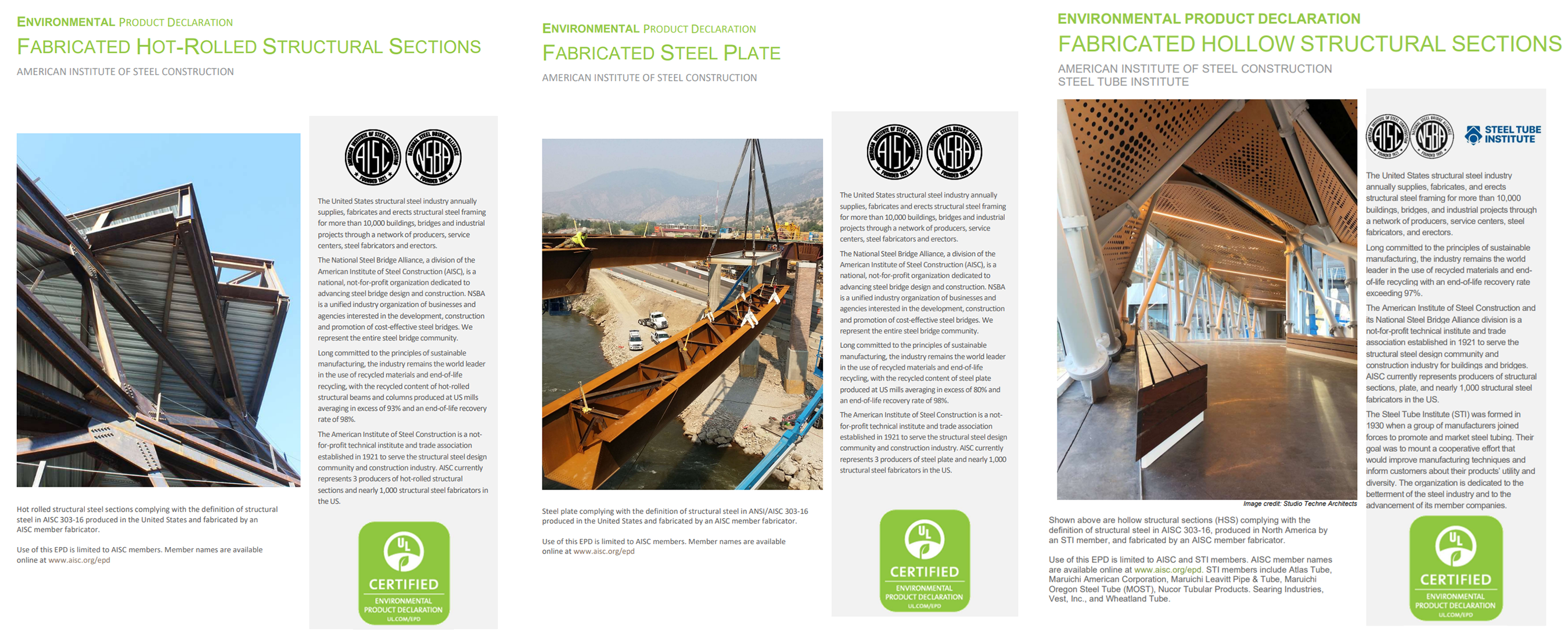
An Environmental Product Declaration (EPD) summarizes and declares the results of an LCA. It’s a standardized document that provides detailed and third-party verified information about the environmental impact of a product throughout its lifecycle. It follows international standards and covers aspects such as raw material extraction and collection, production, transportation, use, and end-of-life disposal or recycling. For specifiers, an EPD offers transparent data that can inform sustainable design decisions, support green building certifications like LEED or GreenGlobes, and help in selecting materials that align with environmental performance goals.
What is a PCR?
Product Category Rules (PCRs) are documents that prescribe a narrower set of rules and methods for LCAs and EPDs that apply to a particular product category. These requirements help to ensure EPD comparability between like products from different producers and manufacturers and a common basis for evaluating the environmental impacts of dissimilar products that cannot be directly compared. For steel construction products, the latest version of the applicable PCR is Part B PCR for Designated Steel Construction Products, 1000-008, v3.0, found at the Smart EPD® PCR Library. A detailed discussion of PCRs, including an overview of the current PCR for steel construction products, can be found at aisc.org/pcr.
The structural steel industry actively supports the transparent reporting of environmental impacts associated with construction products. Many rating systems (LEED ), standards (ASHRAE), green building codes (IgCC), policy authors, and specific customers require the submission of environmental product declarations (EPDs) for products delivered to the project site.
Summary of U.S. facility-specific EPDs
Facility-specific EPDs represent the products made at a particular mill or manufacturer location. As 90% of the global warming potential (GWP) impacts for fabricated structural steel occur during mill production, these facility-specific EPDs are the appropriate reference for those conducting whole building life cycle assessments (WBLCAs) of the built environment after specific procurement decisions are known.
Hot-rolled Sections
Notes:
- The table represents the most recently published GWP data from relevant domestic structural steel locations as of October 21, 2025.
- The table is intended solely to provide a quick reference summary for those trying to comply with GWP procurement policies such as Buy Clean.
- The table is not intended to provide a basis from which policy makers could determine industry average performance. Industry-average performance is reported in industry-average EPDs, listed further down on this page. If you are a Buy Clean policy author, see AISC’s Buy Clean Guidance for Structural Steel Products.
- The table is not intended to make direct comparisons between products. Life Cycle Assessment (LCA) literature (including ISO standards, the North American Steel Construction Products Product Category Rule (PCR), and each EPD itself in the table) makes clear that EPD comparability is limited and urges caution when comparing EPDs outside the context of a robust whole-building LCA. In order to make comparisons, differences in background datasets, age of primary data, impact assessment factors, LCA methodologies, PCR versions, and more must be considered.
Plate
Notes:
- The table represents the most recently published GWP data from relevant domestic structural steel locations as of October 21, 2025.
- The table is intended solely to provide a quick reference summary for those trying to comply with GWP procurement policies such as Buy Clean.
- The table is not intended to provide a basis from which policy makers could determine industry average performance. Industry-average performance is reported in industry-average EPDs, listed further down on this page. If you are a Buy Clean policy author, see AISC’s Buy Clean Guidance for Structural Steel Products.
- The table is not intended to make direct comparisons between products. Life Cycle Assessment (LCA) literature (including ISO standards, the North American Steel Construction Products Product Category Rule (PCR), and each EPD itself in the table) makes clear that EPD comparability is limited and urges caution when comparing EPDs outside the context of a robust whole-building LCA. In order to make comparisons, differences in background datasets, age of primary data, impact assessment factors, LCA methodologies, PCR versions, and more must be considered.
Hollow Structural Sections
Notes:
- The table represents the most recently published GWP data from relevant domestic structural steel locations as of October 21, 2025.
- The table is intended solely to provide a quick reference summary for those trying to comply with GWP procurement policies such as Buy Clean.
- The table is not intended to provide a basis from which policy makers could determine industry average performance. Industry-average performance is reported in industry-average EPDs, listed further down on this page. If you are a Buy Clean policy author, see AISC’s Buy Clean Guidance for Structural Steel Products.
- The table is not intended to make direct comparisons between products. Life Cycle Assessment (LCA) literature (including ISO standards, the North American Steel Construction Products Product Category Rule (PCR), and each EPD itself in the table) makes clear that EPD comparability is limited and urges caution when comparing EPDs outside the context of a robust whole-building LCA. In order to make comparisons, differences in background datasets, age of primary data, impact assessment factors, LCA methodologies, PCR versions, and more must be considered.
Open-Web Steel Joists
Notes:
- The table represents the most recently published GWP data from relevant domestic structural steel locations as of October 21, 2025.
- The table is intended solely to provide a quick reference summary for those trying to comply with GWP procurement policies such as Buy Clean.
- The table is not intended to provide a basis from which policy makers could determine industry average performance. Industry-average performance is reported in industry-average EPDs, listed further down on this page. If you are a Buy Clean policy author, see AISC’s Buy Clean Guidance for Structural Steel Products.
- The table is not intended to make direct comparisons between products. Life Cycle Assessment (LCA) literature (including ISO standards, the North American Steel Construction Products Product Category Rule (PCR), and each EPD itself in the table) makes clear that EPD comparability is limited and urges caution when comparing EPDs outside the context of a robust whole-building LCA. In order to make comparisons, differences in background datasets, age of primary data, impact assessment factors, LCA methodologies, PCR versions, and more must be considered.
Steel Deck
Notes:
- The table represents the most recently published GWP data from relevant domestic structural steel locations as of October 21, 2025.
- The table is intended solely to provide a quick reference summary for those trying to comply with GWP procurement policies such as Buy Clean.
- The table is not intended to provide a basis from which policy makers could determine industry average performance. Industry-average performance is reported in industry-average EPDs, listed further down on this page. If you are a Buy Clean policy author, see AISC’s Buy Clean Guidance for Structural Steel Products.
- The table is not intended to make direct comparisons between products. Life Cycle Assessment (LCA) literature (including ISO standards, the North American Steel Construction Products Product Category Rule (PCR), and each EPD itself in the table) makes clear that EPD comparability is limited and urges caution when comparing EPDs outside the context of a robust whole-building LCA. In order to make comparisons, differences in background datasets, age of primary data, impact assessment factors, LCA methodologies, PCR versions, and more must be considered.
Which EPDs represent the whole industry?
Industry-wide EPDs meet ISO standards to ensure they are representative of their industries. As such, they are the appropriate reference for those conducting whole building life cycle assessments (WBLCAs) of the built environment before specific procurement decisions are known.
AISC develops industry-wide EPDs for three structural steel products:
- Hot-Rolled Structural Steel Sections*
- Fabricated Steel Plate
- Fabricated Hollow Structural Sections (HSS) - developed in conjunction with the Steel Tube Institute
- Fabrication Process for Structural Steel*
*These two EPDs are newly published in October 2025. Hot-Rolled Structural Steel Sections showcases a more than 10% decrease in embodied carbon from its 2021 predecessor. Why the reduction? Three primary reasons: less use of ore-based metallics (OBMs), a greener U.S. electrical grid, and more on-site renewable energy generation. Fabrication Process for Structural Steel captures the environmental impacts from structural steel fabrication, a common downstream process for structural steel. These two EPDs are intended to be used together when representing cradle-to-fabricator-gate impacts of hot-rolled structural steel sections. See the background report to learn more.
Another representation of the carbon-emission intensity of domestic steel construction products is found in the 2024 report, Global Warming Potential Impacts of Domestic Steel Construction Products, authored and published by the domestic steel construction industry in support of the FHWA Low-Carbon Transportation Materials (LCTM) Grant Program.
Questions? Contact Max Puchtel, Director of Sustainability and Government Relations, at [email protected]