How do you build a better future, one that’s lighter on the planet’s resources but stronger for tomorrow’s generations? You start with the right materials.
Steel has always been a symbol of strength, but it’s also a model of circularity--melted down, reshaped, and reborn again and again. In honor of SteelDays, we’re spotlighting the innovations and leaders that make steel the ultimate sustainable choice. From cutting-edge mills powered by renewable energy to design strategies that optimize material use, sustainability isn’t just a benefit to structural steel--it’s a core reason to choose it for your next project.
Whether you’re exploring new technical resources, taking a virtual mill tour, or broadening your green design knowledge, you’ll see how the steel industry is reimagining what it means to build responsibly.
Renewable Energy, Reusable Steel
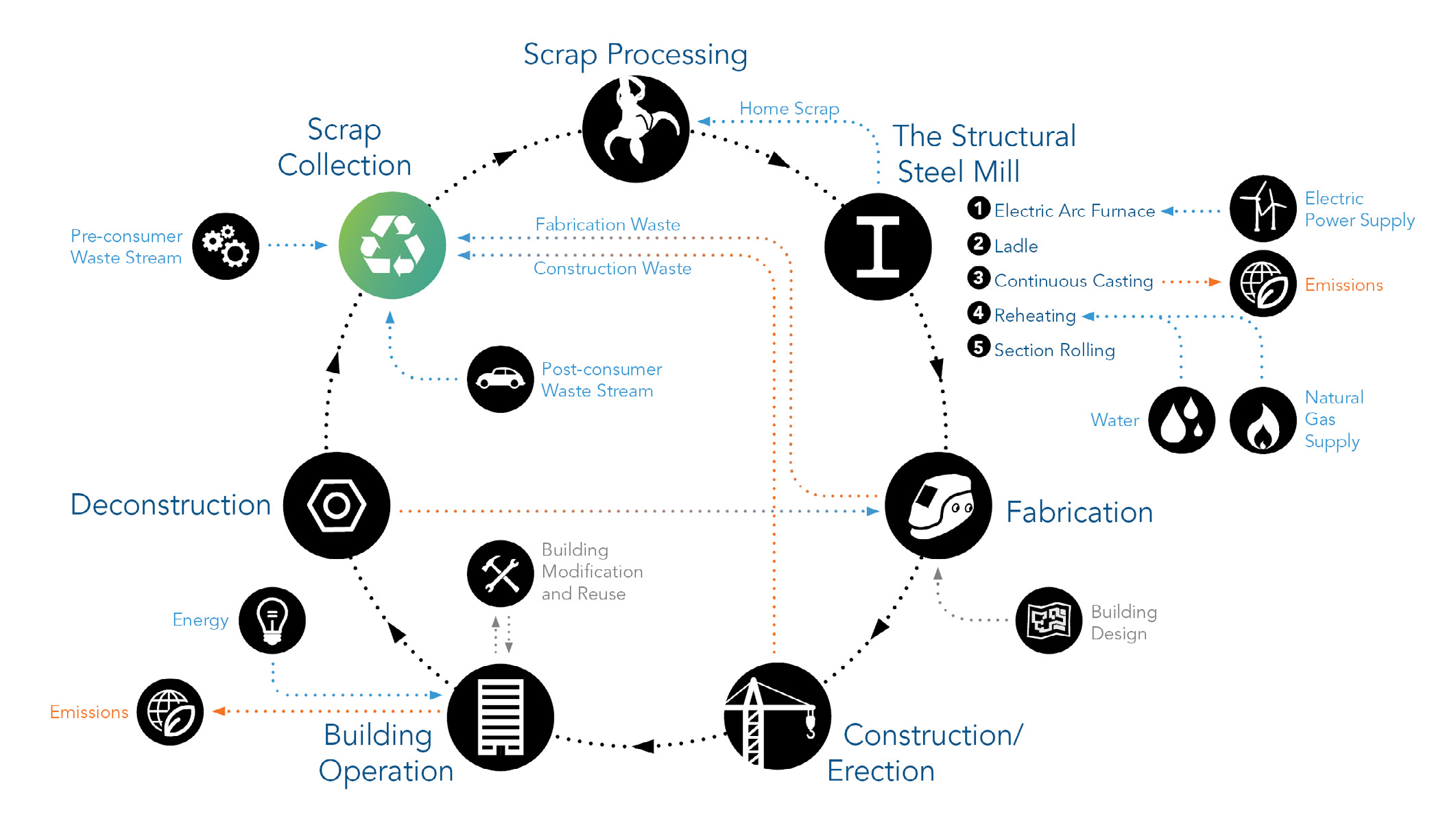
If you’re looking for the premier green construction material, you’ve found it in structural steel. While other materials are destined for the landfill or an incinerator, decommissioned steel bridges and buildings go right back into the supply chain to become steel over and over again.
Hear directly from sustainability champions in the structural steel industry why steel is the most environmentally friendly construction material.
All the Resources You Need, In One Place
Structural steel’s straightforward environmental documentation helps you make informed decisions about sustainability. You just have to know where to look.
We’ve done the work for you! AISC's Sustainability Toolkits provide up-to-date, accurate technical resources, from Environmental Product Declarations (EPDs) to specific design guidance, that empower designers, owners, builders, and policymakers to champion low-carbon, resilient projects.
Explore our tools and discover how structural steel leads in recyclability, strength, and circularity--and how you can contribute to a greener built environment.
Watch Old Steel Become New Again
You already know that all structural hot-rolled sections produced in the U.S., including typical wide-flange beams and columns, are made in electric arc furnaces. Wouldn’t it be cool to see electricity melting steel scrap into new sections with your own eyes?
Find a comfy spot, put on your hard hat (optional!), and hit play on the video below for a virtual reality tour of the state-of-the-art Nucor-Yamato Steel mill in Blytheville, Ark. Make sure to “look around” the video with your cursor or finger to see how steel is made!
If you want to keep the fun going, head to aisc.org/vr for four other tours that take you inside fabrication shops, galvanizing facilities, and more!
Partners in Sustainability
Fabrication accounts for less than 10% of structural steel’s carbon footprint, but fabricators themselves can guide decisions that have a much bigger impact. They are the connection between procurement and project success--and that’s why we made it easy for you to partner with the greenest fabricators!
Our Sustainability Partner fabricators have demonstrated that they have the knowledge and dedication to make a difference on your project team, from minimizing their own environmental impacts to navigating regulatory requirements. AISC’s program is the only one in the country that leverages the role of structural steel fabricators to reduce environmental impacts, maximize what the supply chain can do, and deliver sustainable project outcomes.
Find out more about the program (and take the first steps toward joining!) at aisc.org/partnerprogram.
Top 5 Sustainability Facts You Need to Know
We hope you like to nerd out about embodied carbon reduction and life cycle assessments as much as we do, but in case you’d rather have the TL;DR version, here’s where we think you should start.
- The average new member contains 92% recycled steel and is 100% recyclable.
- New data shows an 11% reduction in the embodied carbon of structural steel. (Why? Chalk it up to less use of ore-based metallics, a greener U.S. electrical grid, and more on-site renewable energy generation.)
- The structural steel making process boasts a 95% water recycling rate with no external discharges, resulting in a net consumption of only 70 gallons per ton.
- Steel structures are already speedy to construct, but when you pair a steel frame with dropped-in timber floors, you can erect a new building in a flash! Get all the know-how you need to start designing hybrid buildings in AISC’s Design Guide 37: Hybrid Steel Frames with Wood Floors. Don’t miss our Hybrid Steel-Timber Smart Reference, a quick outline that orients you with the design guide.
- Bypassing the furnace step, steel sections from decommissioned buildings can go directly to their second life, repurposed in other structures in the community and beyond. Find out how a Boulder, Colo. deconstruction provided usable steel--fast--for other local projects.
Guess That Word
We’ll give you a hint: It has to do with sustainability. See how fast you can solve today’s steel-themed Wordle!
Share your results with us (no spoilers, please!) on LinkedIn, Facebook, and Instagram.
Solve the Wordle