Some materials crack, combust, or decompose in the aftermath of disaster. Steel? It’s made to endure.
Structural steel framing systems are strong enough to withstand hurricane-force winds, seismic vibrations, and surging stormwaters--over and over again. They can be more easily adapted, repaired, and reused than any other building material.
And steel bridges? You might have driven over a century-old bridge today and not even known it.
This SteelDays, we’re bringing out the case studies, timelines, and design resources that show just how resilient steel is.
Celebrate with us while you explore inspiring examples of adaptive reuse, dive deep into the history of steel bridges, learn how our industry comes together in a crisis, and much more.
Built to Bounce Back
Why do specifiers choose structural steel time and time again? Well, for one, it has a knack for reinvention.
If you’re looking for versatility, steel is unrivaled. Steel structures can evolve with ease, changing shape and expanding to meet the unanticipated needs of sites, clients, and communities.
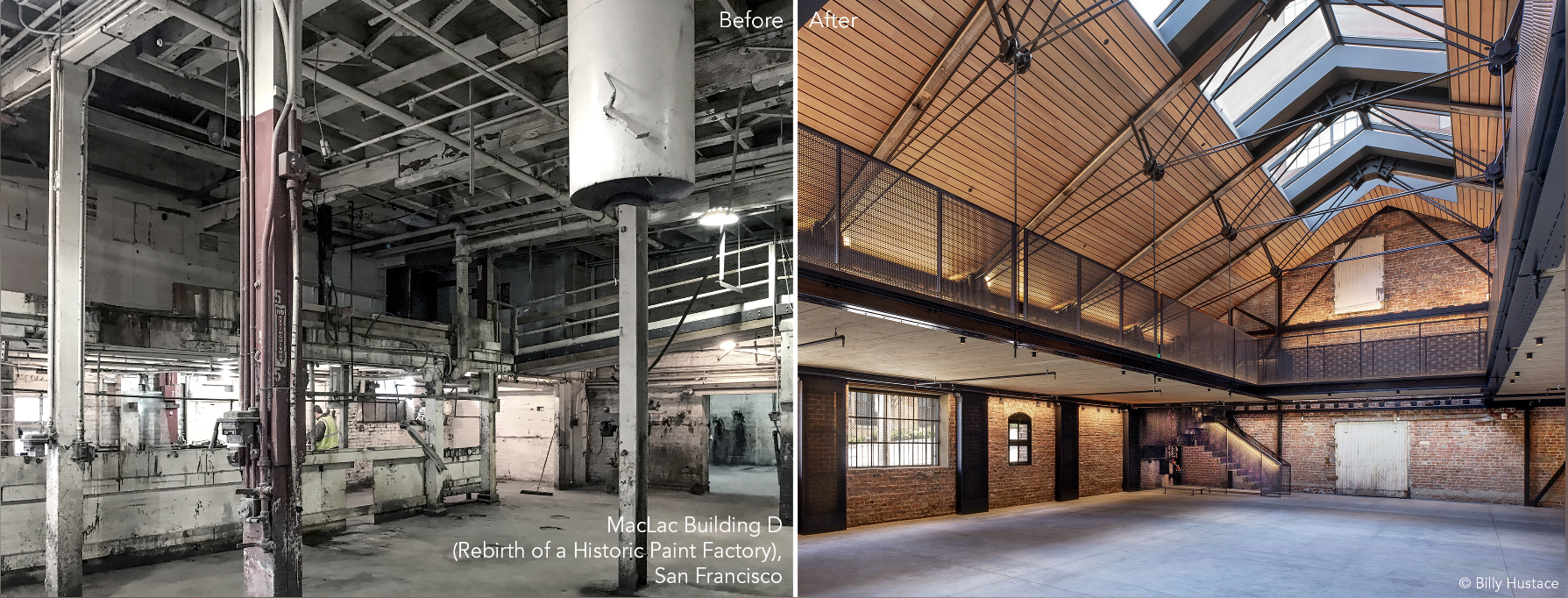
Curious what it looks like when a steel frame gets a second life? In San Francisco, adaptive reuse transformed a historic paint factory into a contemporary office building. In midtown Manhattan, it was the key to bringing an aging Penn Station into the 21st century and reinstating it as a grand gateway into the city (with a bonus of showing off steel girders from the early 1900s!). In short, the possibilities are limitless.
Learn more about adaptive reuse (and see it in action!) at aisc.org/adaptability.
A Legacy for the Ages
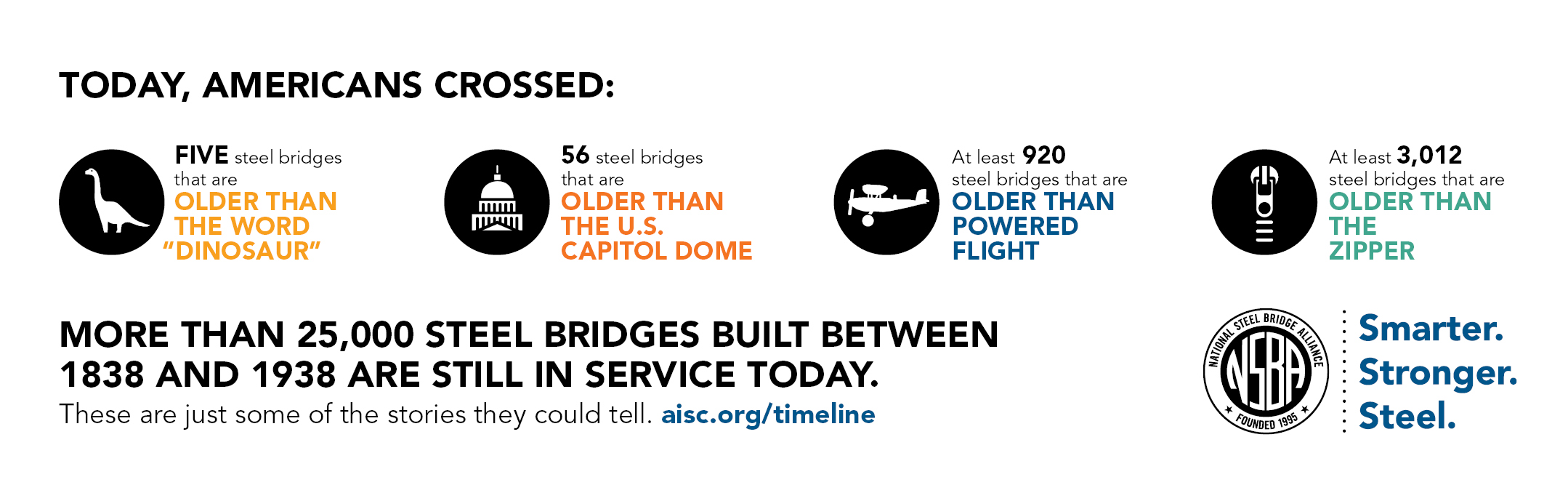
Did you know that the oldest steel bridge still in service in the U.S. opened during Abraham Lincoln’s lifetime? Yup. Americans have relied on steel bridges for more than a century. AISC celebrated some of them during its own centennial celebrations in 2021.
Check out our award-winning timeline for the full historical context of some bridges that are going strong well into the 21st century. (Plus, if you’ve ever wondered about the first cow to fly on an airplane, we’ve got you covered.)
In Case of Emergency, Call the Steel Industry
Resilient communities rely on resilient infrastructure--and that’s why the steel industry works together to get people moving fast when there’s a bridge emergency.
That means full repair only 24 days after a fire damaged a main truss compression chord on Pittsburgh’s Liberty Bridge. Plans for new plate girders delivered less than two weeks after a landslide damaged the Pfeiffer Canyon Bridge beyond repair, completely cutting off a Big Sur, Calif. community.
Check out the inside story of how the steel industry got interstate traffic flowing on the Hernando de Soto Bridge between Memphis and West Memphis, Ark. just 83 days after the discovery of a partial tie girder fracture.
 The Fast Track to Durable Bridges
Pop quiz: Name a corrosion protection system that’s proven itself attractive, economical, easy to maintain, and sustainable for the last 50 years.
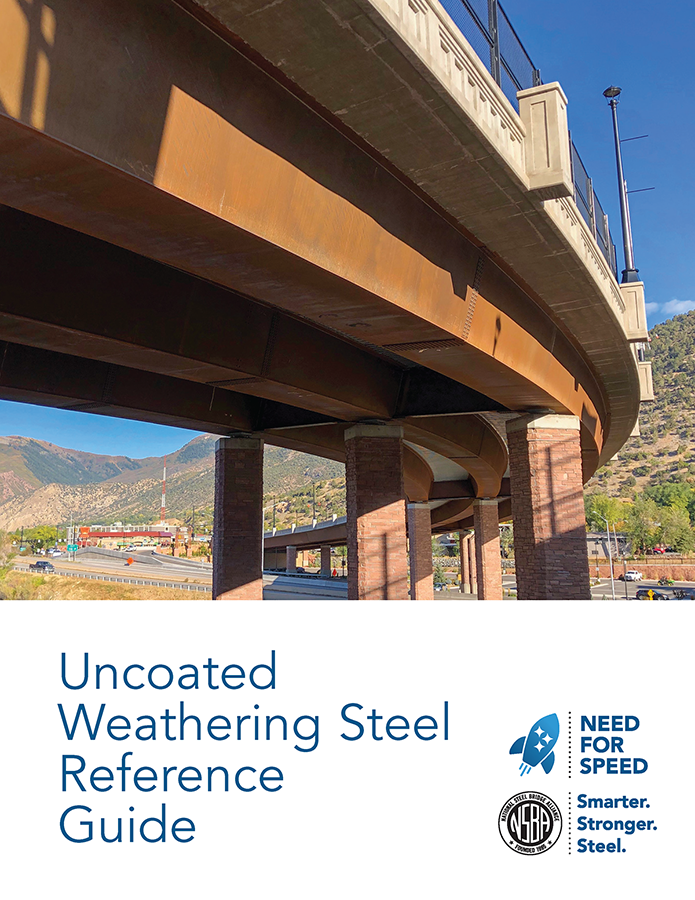
It’s uncoated weathering steel, and it’s suited to more environments than you might think!
Uncoated weathering steel isn’t an applied system, which means that there’s no coating to apply after fabrication--or pay to maintain. That saves emissions related to both initial production and ongoing maintenance, too. Two to five years after initial exposure to the elements, a rich, purple-brown patina develops on the steel’s surface, providing both excellent long-term protection and a striking appearance that turns heads in a variety of settings.
We’ve compiled the info you need into one handy reference guide.
Steel Can Take the Heat
Here’s a hot take: There’s a faster, more economical way to fix the aftermath of a truck strike on a steel bridge. Skilled crews can apply heat to precisely the right places to restore the steel to its original shape--onsite.
That’s precisely how Oklahoma residents got back on the road after a piece of construction equipment struck three of four girders on an overpass. We have the inside story, of course!
Five Resilience Resources to Save for a Rainy Day
- Make some space on your (digital) bookshelf! AISC Design Guide 15: Rehabilitation and Retrofit, and Design Guide 16: Assessment and Repair of Structural Steel in Existing Buildings, are invaluable to your next project--and members get free downloads!
- Go behind the scenes of Seattle’s Climate Pledge Arena: the project that won two AISC awards decades apart.
- Design smarter and maximize corrosion resistance using NSBA’s guide to steel bridge durability and preservation.
- Explore our technical references for extending the in-service life of steel bridges--conveniently compiled in one place.
- …And it never hurts to go back to basics! Our spotlight on resilience provides a helpful, research-backed overview on why structural steel is the most durable building material.
Word on the Street Is…
Well, we can’t actually tell you, but we’ll give you six guesses! How fast can you solve today’s steel-themed Wordle puzzle?
Hint: It may have something to do with resilience.
Share your results with us (no spoilers, please!) on LinkedIn, Facebook, and Instagram.
Time to get solving