The world is constantly changing, and structural steel isn’t just keeping up--it’s setting the bar (or, shall we say, beam) higher.
AISC and the structural steel industry consider the future a priority today. Investments in research and technology are improving safety and efficiency on jobsites as well as shaving months off project schedules!
Plus, we’re supporting and inspiring the leaders of tomorrow with scholarships, exciting competitions, and opportunities to participate in industry activities.
To close out SteelDays, we’re turning the spotlight on the innovations and initiatives that make us excited for the decades to come.
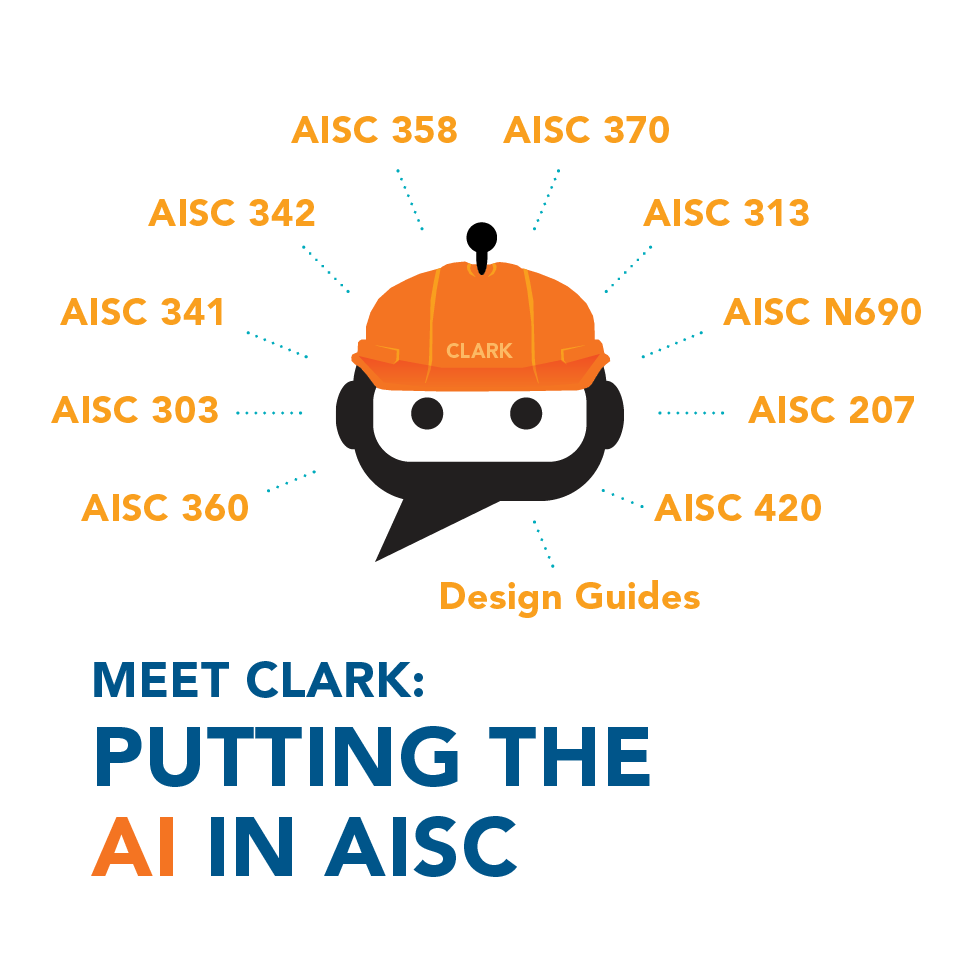 AI and Steel: A Look Ahead
We can’t talk about the future without talking about the automations defining the present. Where does artificial intelligence fit into your structural steel workflow? What is its place in our industry as a whole? Our *free* SteelDays webinar, live today (October 24) at 12:30 p.m. Central, explores these questions and more, with insights from AISC Director of Technology Integration Luke Faulkner.
No matter your role in the AEC industry, you’ll find useful takeaways in this foundational look at AI applications in steel, including an introduction to an exciting AISC initiative launched earlier this year.
Save your spot now!
Hot Off the Printer
Earlier this year, AISC and steel industry partners made a 36-ft-long 3D-printed steel pedestrian bridge to showcase the type of connections and geometries made possible with additive manufacturing. Following its display at NASCC: The Steel Conference, the bridge became part of a load testing research project that ventured into new territory and remains ongoing.
Watch the video below to get the scoop on the design and printing of the additive-manufactured steel pedestrian bridge! Want to find out more? Read all about the bridge in the November 2025 issue of Modern Steel Construction.
Designing the Railroad Trestle of the Future
Someone in Pueblo, Colo. got really tired of driving a train over the same steel bridge, over and over again, for months. The sample bridge in question: a modular steel unit that can quickly and cost-effectively replace hundreds of miles of aging timber railway trestle bridges that are still in service nationwide. A 45-ft-long steel span can replace three 15-ft-long timber trestles while eliminating additional supporting piers. The design uses readily available beams, and the finished units can be assembled offsite and installed with an on-track crane.
The testing phase is over, much to the relief of our nameless train driver, and the project is chugging along! Next station: full structural plans sealed by a professional engineer. Fry Technical Services is currently working on standard design plans for single spans ranging from 30 ft to 60 ft, and two Class-I railroads intend to adopt those plans into their standard sets.
The project is a core part of NSBA’s railroad bridge program. Check out the resources that are available to bridge engineers right now!
Toasting to Tomorrow’s Changemakers
As technology reshapes how steel buildings and bridges are designed, fabricated, and erected, a new generation of innovators paves the way forward. Students in AEC classrooms (and those at industry events, in the case of AISC Education Foundation grant recipients!), are driving advancements in structural research and redefining what’s possible with steel.
See the student designs that turned heads and swept thousands in prizes in the 2025 AISC/ACSA Steel Design Student Competition, which challenged participants to design a community library placing structural steel front and center. The first-place project merges the worlds of steel and ecology into an engaging community resource!
Student innovations also abounded in this year’s Student Steel Bridge Competition National Finals, which brought together 43 qualifying teams from colleges and universities across North America. Read our coverage to find out which team secured their record-breaking fifth consecutive win (and built a scale-model bridge in under 10 minutes), peruse the National Finals photo album to see these awesome bridges up close, or visit aisc.org/ssbc to learn more about the program!
Want to see all the ways students, educators, and young professionals are experiencing the world of steel through scholarship, fellowship, and grant programs? Keep up with AISC Education Foundation Impact updates to read their stories and learn how support for these programs is Funding the Future every day.
Top Five Innovations to Watch
AISC's research activities aim to improve steel codes and specifications, reduce the cost of steel construction, and improve the performance of steel buildings and bridges. Here are a few topics we’re buzzing about this year!
- Artificial intelligence is here and making it easy to parse thousands of pages of steel standards in minutes. AISC’s new chatbot, Clark, searches through the Steel Construction Manual, Seismic Design Manual, all AISC standards, and all AISC design guides for answers--and even cites its sources.
- Research continues on FastFloor, a modular steel floor framing and diaphragm system for commercial building structures. We’re doing exhaustive studies on the strength and serviceability of the system to provide a solution with broad applicability that will decrease overall construction time.
- In addition to testing the 3D-printed steel pedestrian bridge displayed at NASCC: The Steel Conference, we’re exploring the feasibility of additive manufacturing through other channels. AISC recently awarded Georgia Tech’s Ryan Sherman the Milek Fellowship for investigating the efficient implementation of wire arc additive manufacturing (WAAM) in steel projects, particularly those with complex or unique structural components.
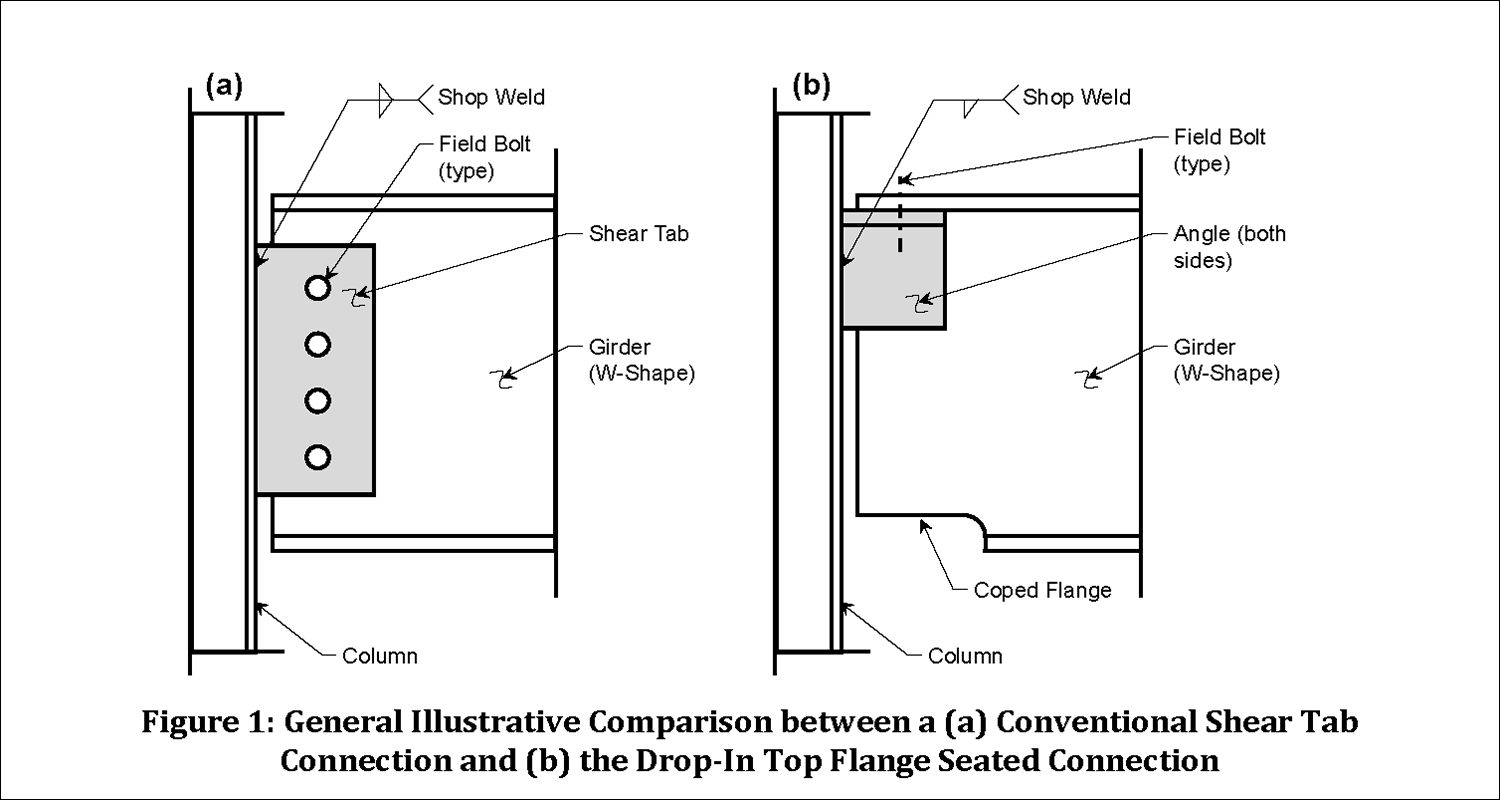
- The first phase of our research on drop-in connections focused on connecting a beam to a column flange. Now that it’s complete, we’re embarking on phase two, studying connections from beams to girders.
- AISC’s research on asymmetric shapes in floor systems--a composite beam system within the depth of the floor structure--is complete. We’re currently preparing a case study to show how the system works in a realistic scenario as well as discuss possible connections, façade attachments, and cost comparisons to other systems.
Word Play
You don’t need a crystal ball to figure out our word of the day! See how many tries it takes to solve today’s puzzle.
Share your results with us (no spoilers, please!) on LinkedIn, Facebook, and Instagram.
Take a guess